

Material knowledge required for designing and processing spinning mandrel
Metal spinning mandrel
As is well known, a reasonable selection of mandrel materials can not only reduce the cost of mold processing, but also improve the processing quality of products. This article will focus on the material selection in the design of spinning mandrel.
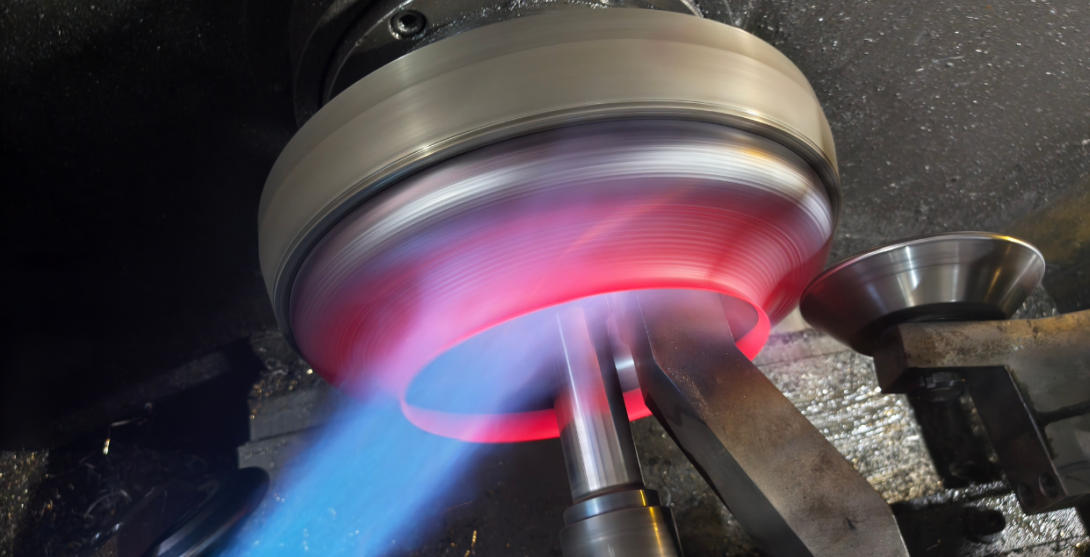
The performance of steel generally mainly includes several indicators: hardness, toughness, tensile strength and impact resistance. After undergoing appropriate and corresponding heat treatment, steel can obtain the required mechanical properties. Generally, the properties required for spinning mandrel are hardness and toughness. Impact resistance is generally a mechanical property required for stamping dies. Now let's explain the commonly used materials for spinning mandrel.
Hand spinning mandrel
45# spinning mandrel
45# is a commonly used type of steel, often employed as structural steel in mechanical design. The comprehensive performance of 45# steel after quenching and tempering is relatively good. The molds for manual spinning are generally made of 45# steel because the force of manual spinning will not subject the molds to a large extrusion force. Usually, the materials for manual spinning are mostly aluminum(HRC 0), mild steel and copper, and these spinning materials are relatively soft. 45# steel is directly processed on a lathe and does not require quenching and tempering treatment. When using CNC spinning to form aluminum, 45# steel can also be used as the spinning mandrel.
Main spinning material :aluminum
Can 45 # steel be used to make stainless steel spinning mandrel
The hardness of 45 # steel is HRC8-14, and the hardness after quenching and tempering is HRC20-25. The hardness of commonly used deep drawing stainless steel plates is HRC10-18. Therefore, when the spinning mandrel of 45 # steel is used to form stainless steel, the surface of the mandrel is prone to deformation and scratches, and the wear is relatively large after long-term use. stainless steel spinning is prone to cracking, unstable dimensions and internal scratches when we use the 45# to make mandrel.
Material cost and process cost
The mold material of 45# steel is the cheapest, with a unit price of more than 1.19 US dollars per kilogram. Meanwhile, since the hardness of 45# steel is generally HRC8-14, it is very easy to process on lathes and has a relatively low processing ratio.
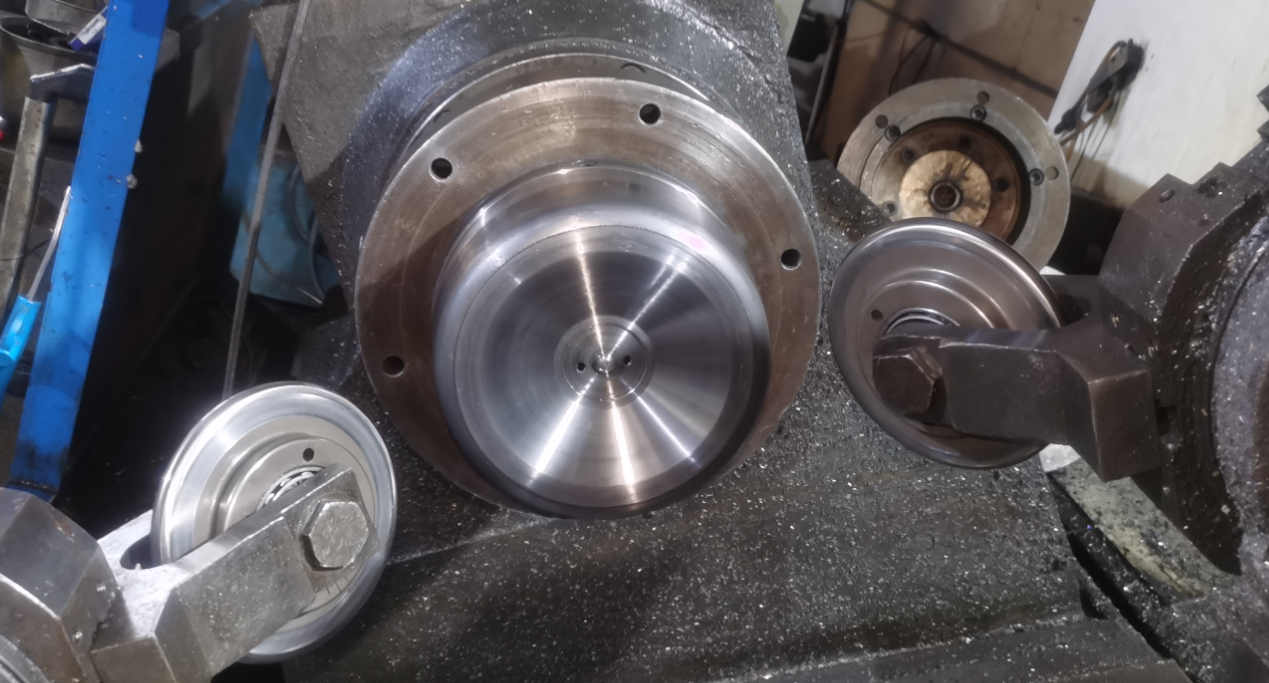
CNC spinning mandrel
40Cr spinning mandrel
The hardness of 40Cr after heat treatment is HRC48-52. When spinning steel, the hardness is basically sufficient. However, when spinning stainless steel 304 (HRC 10-18 ) , after spinning 100 to 200 pieces of 40Cr, the surface is prone to scratches. The mold surface needs to be precisely turned again to ensure that there are no scratches inside the spun products. Generally, in order to consider the overall cost, when the diameter of the spinning stainless steel mold is greater than 400mm and the production quantity is not large, 40Cr is usually chosen.
Main spinning material :steel, stainless steel(diameter>400mm,Small-batch production)
Material cost and process cost
The hardness of 40Cr before heat treatment is basically the same as that of 45 # steel, so the cost of rough turning processing is basically the same, and the unit price of the material is also similar. However, 40Cr requires heat treatment. After heat treatment, it needs to be loaded onto a spinning machine for finish turning. Therefore, 40Cr steel incurs additional costs for heat treatment and finishing compared to 45 # steel.
Cr12 spinning mandrel
After heat treatment, CR12 material can reach HRC55. When spinning stainless steel or some materials with a hardness greater than that of stainless steel, Cr12 is selected as the material for spinning mold. The spinning mold of Cr12 are basically not scratched by workpieces and have a very good mold life. After polishing, the Cr12 mold can achieve a mirror-like finish, which greatly improves the inner surface quality of the spun products. For instance, the inner surface of the aluminum shell for lighting fixtures can reach a mirror-like finish. However, 45 and 40Cr cannot be polished to a mirror finish due to insufficient hardness.
Material cost and process cost
The hardness of cr12 molds is HRC18-26. Due to its higher hardness than that of 45# steel and 40cr, the cutting depth during turning is smaller and the processing speed is slower. The raw material of Cr12 is 2.08 US dollars per kilogram, and its raw material cost is also higher than that of 45 # and 40Cr. The hardness of Cr12 after heat treatment can reach HRC56. However, the material and process cost of cr12 is the highest.
Main spinning material :stainless steel
Cr12mov spinning mandrel
The processing and manufacturing cost of CR12mov is slightly higher than that of CR12. However, the hardness of CR12MOV after heat treatment is HRC58, and it has better impact resistance. CR12MOV is only used in products that require polishing of the interior of spun stainless steel and a mirror-polishing.
Main spinning material :stainless steel,the hardness of the metal is harder than stainless steel
Can Cr12 and cr12mov molds be used for hot spinning
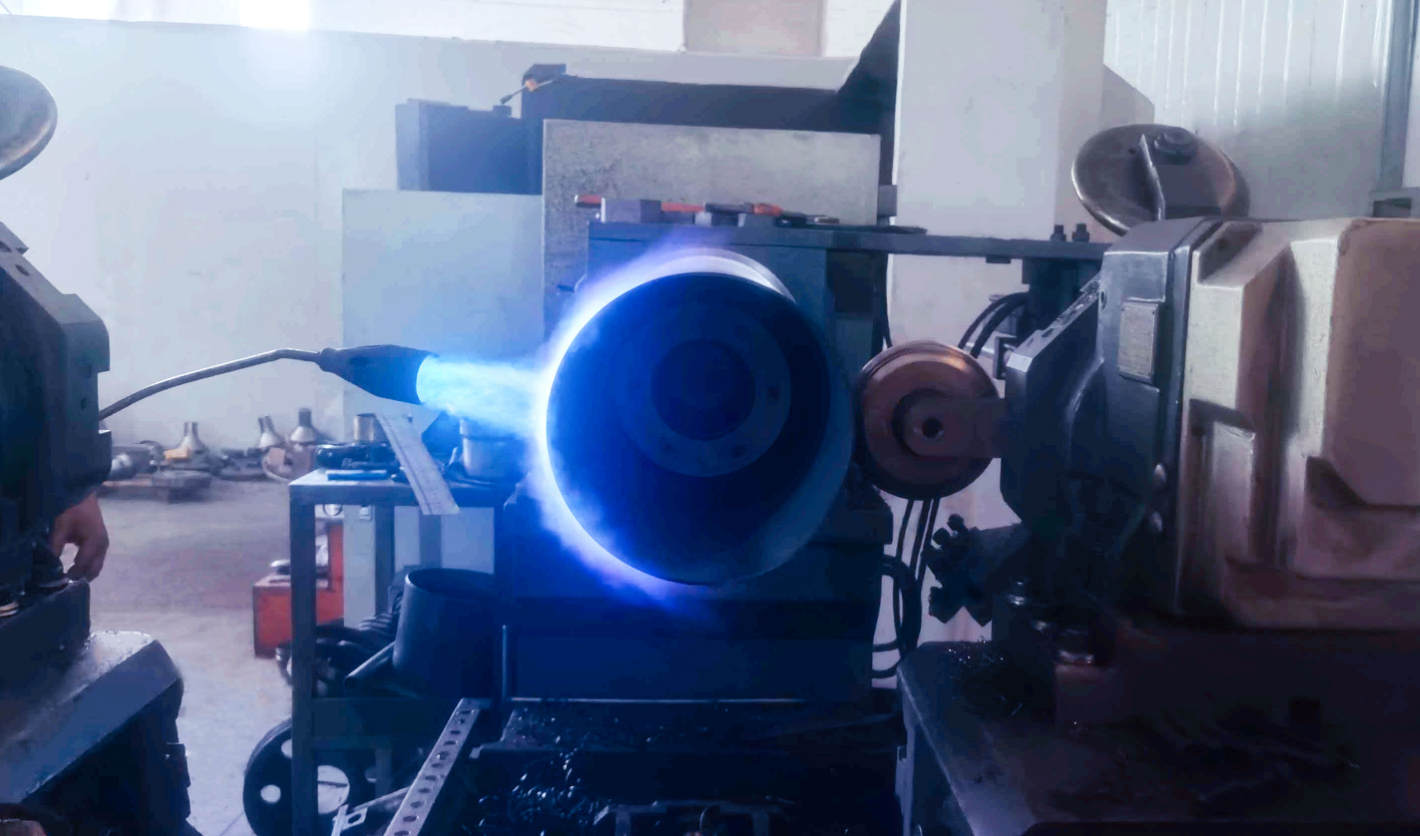
Cr12 is a type of cold working die steel. When Cr12 is heated in a hot spinning die, if cutting fluid or water accidentally comes into contact with the die, it is also prone to cracking. The mold has relatively poor impact resistance. If there is an operational error during the spinning process and the cutter wheel hits the mold, the mold is prone to cracking. When Cr12 is heated up in the hot spinning die, if cutting fluid or water accidentally comes into contact with the die, it is also prone to cracking.
H13 spinning mandrel
H13 Compared with Cr12 cold work steel, it has much higher toughness and is less prone to chipping or cracking when subjected to impact and alternating loads. It is preferred for hot forging and red stamping. Alternating between hot and cold operations is less likely to cause cracking. Water cooling is allowed when the mold is in operation. It is suitable for repeated rapid heating and cooling conditions such as die-casting and hot forging
Material and process cost
The material cost of H13 is 3.58 US dollars per kilogram. Its hardness before heat treatment is HRC17-22, and its machining performance is between 40CR and CR12. The mandrel manufacturing cost is similar to that of CR12.
Comparison
|
Mandrel Material |
Hardness |
Cost |
Spinning material |
|
45# |
HRC20-25 |
cheapest |
Aluminum |
|
40Cr |
HRC48-52 |
>45# |
Steel |
|
Cr12 |
HRC55-58 |
>40Cr |
Stainless steel |
| Cr12Mov | HRC58-62 | ≈Cr12 | Stainless steel |
|
H13 |
HRC48-52 |
≈Cr12 |
Hot spinning |
NEXT:
None
Recommended
- -Metal spinning machine-performance, types, price and problem
2026-09-29 - -Metal spinning guide -The factors effect the spin forming
2026-06-25 - -Spin forming principle-CNC metal spinning technology
2026-02-22 - -What is CNC metal spinning machine tool
2024-08-15 - -Metal spinning VS deep drawing - The difference
2026-03-08 - -Aerospace components-Precision manufacturing of CNC spinning
2025-01-29 - -Metal spun products - what product spin forming can do
2025-01-24 - -How to design a CNC metal spinning mold | mandrel
2024-04-12 - -Metal spinning materials
2024-04-14 - -Metal spinning process and technology
2024-11-30