

Metal spinning guide -The factors effect the spin forming
The factor effect the metal spinning
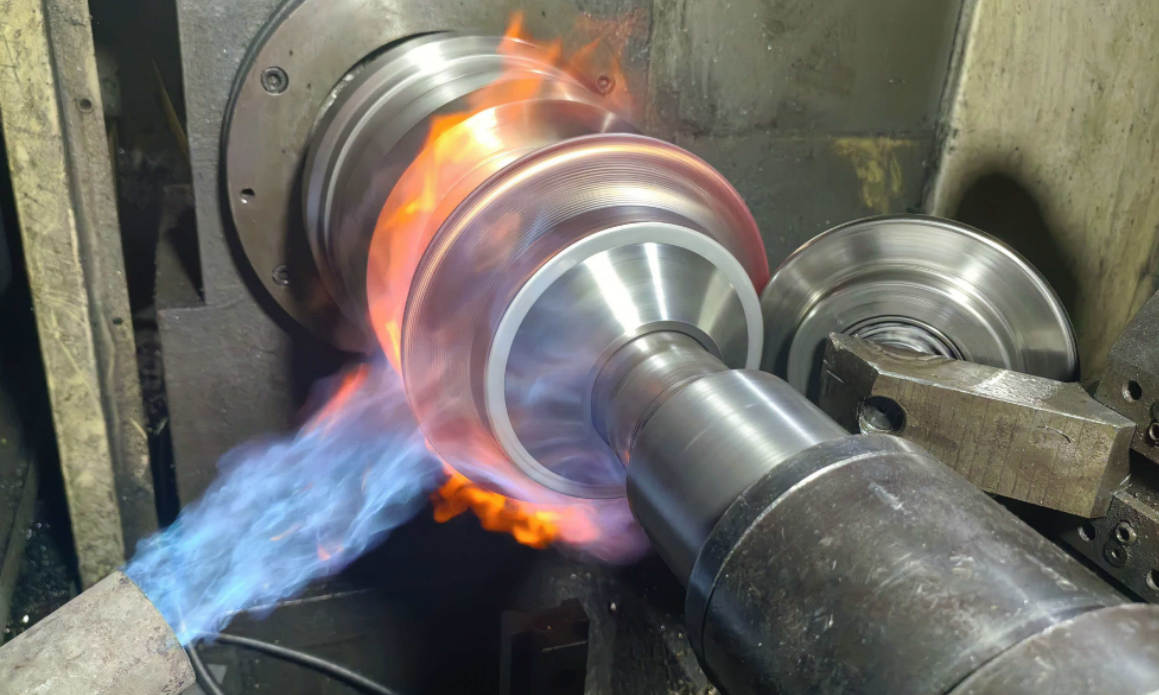
There are many factors that affect spinning forming>, mainly including the performance of the blank material, the precision and rigidity of the metal spinning machine, the setting of the numerical control spinning path and machine parameters, the precision and hardness of the mandrel and roller. To read this article patiently to the end, you will have a deeper understanding of the technology of metal forming.
Choosing Material
Choosing the right spinning is crucial for metal forming. When meeting the design requirements of customers' products, it is advisable to select materials with better spinning forming capabilities as much as possible. Generally, metals with low hardness, small tensile strength and good ductility are easier to form.
When learning spinning forming technology, it is essential to have a comprehensive understanding of the properties of different metal materials.
When you encounter a material that you are not familiar with, you can use AI to look up three properties of this material: tensile strength, hardness, and elongation. By comparing this material with stainless steel 304 or a material you are familiar with, you can have a general understanding of the spinning performance of this material.
Tool path and CNC program
The drawing of CNC tool paths is the key to metal forming. The most important thing is to understand the forming principle of spinning and the basic knowledge of drawing the spinning tool path. In addition to drawing a reasonable tool path movement trajectory, the forming path also needs to reasonably consider parameters such as clearance, spindle speed, and feed speed.
How to drawing CNC metal spinning path>
Choose the appropriate machine
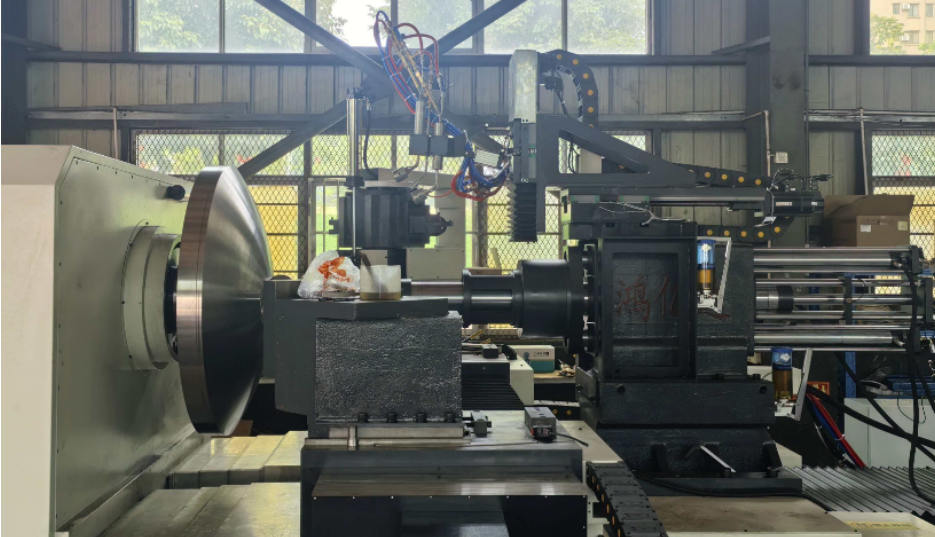
Metal spinning machines> come in different specifications and models. Generally, spinning machines are classified according to spinning force and processing dimensions.
Large-sized spun products require large machines for processing, while thicker products and harder metal need powerful spinning machines for processing.
1. Spinning force
Heavy duty VS light duty
Deceleration and torque increase is the most commonly used principle in machinery to achieve stronger motor torque. The spindle motor of the spinning machine is connected to a pulley or gearbox for deceleration, while the X-axis and Z-axis motors are connected to a reducer when outputting. Therefore, when spinning thick or hard metals, the spindle speed and feed rate of the spinning machine are generally not very fast.
Overall, the speed of movement of light-duty spinning machines is faster, while heavy-duty spinning machines process thicker metals. Machines of the same size, heavy-duty ones are generally 2 to 4 times more expensive than light-duty ones.
2. Processing speed and processing thickness
Taking the processing of spun products with a diameter of 200mm as an example, a general light spinning machine can process 1mm of stainless steel, 1.5mm of iron, and 2mm of aluminum. The maximum spindle speed can reach 6000 revolutions per minute, and the feed rate can reach 10000mm/min. In contrast, a heavy spinning machine can process 3mm of stainless steel and 5mm of iron. For 3mm stainless steel, the average spindle speed used is generally 1200 revolutions per minute. The average feed rate is 2500mm per minute.
3. Why need to choose the right machine
Choosing the right machine can maximize the factory's profits. Heavy-duty spinning machines are generally more expensive. If these are used to spin thin products, the processing speed is not fast enough and the electricity cost is higher. If light-duty spinning machines are used to process thick spun products, vibration will occur, the motor will shut down due to overload protection, and the wear rate of the lead screw and guide rail will accelerate. The worst-case scenario is that the castings of the machine tool bed will crack and be damaged.
4. Machine accuracy
In practical applications, the precision of a metal spinning machine does not need to be as high as that of a CNC lathe. Generally, CNC lathes need to control the maximum repositioning accuracy not to exceed 0.01mm. In actual spin forming applications, a repositioning accuracy of 0.07mm does not affect the forming, except for some spinning products with very high precision requirements,such as aerospace part and medical accessories. The repositioning accuracy of the spinning machine is controlled within 0.02mm.
5. How repositioning accuracy effect spin forming
If the repeat positioning accuracy of the spinning machine is bad, it will cause the gap value between the spinning roller and the mandrel to fluctuate. As a result, the precision of the products made in this way is not very stable, but generally, there is no problem with the formed shape.
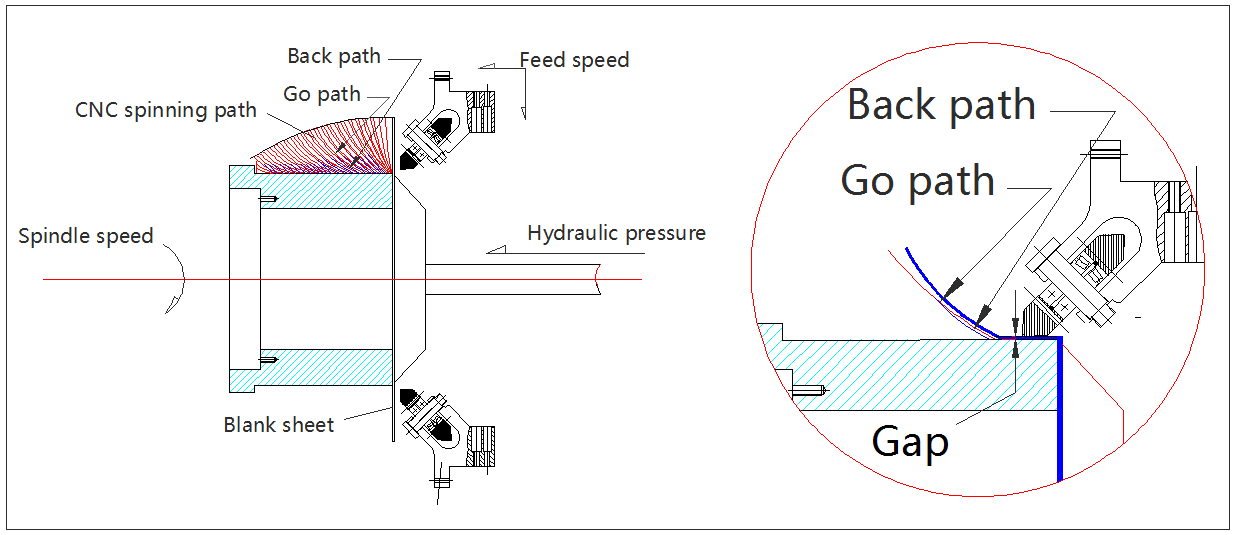
When the gap is too large, the diameter size of the product will be too large, and the product is prone to cracking during forming as the workpiece can’t hold the mandrel tightly. When the gap is too small, the wall thickness of the product will become thinner, and vibration will occur during the spinning process, resulting in uneven spinning line on the exterior surface.
Machine components
1. Spindle
The spindle runout of the spinning machine needs to be controlled within 0.01mm. The runout of the spindle will cause the mold to runout.
The spindle speed affects the thinning rate of the material. The higher the spindle speed, the greater the thinning of the material.
2. Lead screw and guide rail
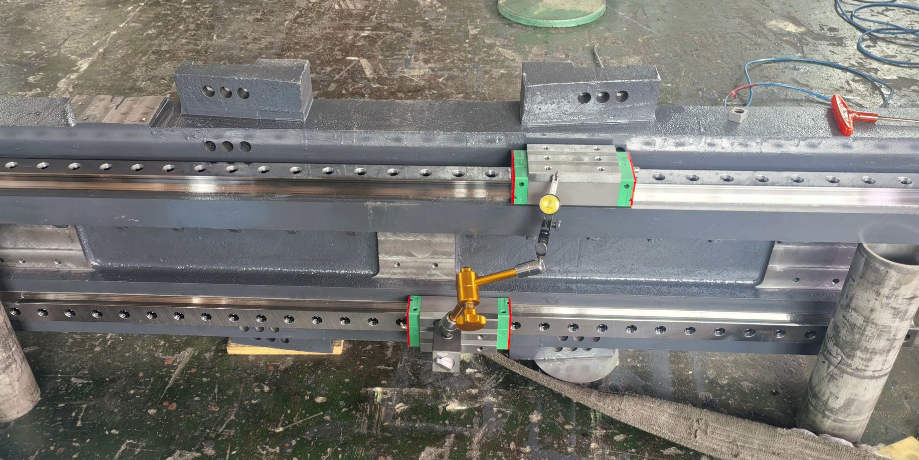
The installation accuracy of lead screws and linear guides affects the repeat positioning accuracy of the machine.
The faster the feed speed during the spin forming and the stronger the spinning force, the faster the wear rate of the lead screw and guide rail.
3. Clamp
The diameter of the clamp or the hydraulic pressure is bigger, the clamping force on the workpiece is bigger.
Insufficient tail-stock pressure can cause scratches inside the spun product or cause the workpiece to shift during the forming process, resulting in cracking. Excessive tail-stock pressure will cause rapid wear of the spindle and clamping bearings.
The tailstock and the spindle must be concentric; otherwise, the workpiece will move and scratch due to uneven pressure from the tailstock during the spinning process.
Machine tool
1. Mandrel ( mold )
● Runout : When the mold is installed on the spindle, it is generally necessary to control the runout within 0.04mm. If the runout is too large, it will cause the wall thickness of any radial section of the spun product to be uneven, and it will be more difficult to control the diameter accuracy of the product.
● Hardness : The hardness of the mold material affects the service life, inner surface quality and processing accuracy of spinning processing. For instance, many factories use 45# steel as the mold for forming stainless steel 304. When the workpiece is pressed by roller, the 45# steel mold is prone to deformation and wear, and its surface is easily scratched by the stainless steel. The interior of the final formed stainless steel product has many scratches, and the precision of spun product is basically uncontrollable.
CNC spinning mandrel VS hand spinning mandrel
Why don't CNC spinning factories use the mold standards of manual spinning factories?
Because the force of manual spinning is limited, and the materials spun are relatively thin. When the workpiece is pressed and pulled, the mold basically won't be subjected to a large spinning force. Therefore, 45# steel is sufficient for manual spinning. Even if the mold runout, it won't have a significant impact. However, the force of CNC spinning machines is very large and the precision is very high. If the hardness and precision of the mold are insufficient, Both forming and accuracy are difficult to guarantee.
● Mold weight reduction : Reducing the weight of the mold will decrease the load on the spindle and reduce the wear of the bearings of the spindle and clamping.
When designing for weight reduction of molds, the uniformity of mold thickness needs to be taken into consideration. Because the mold needs to undergo heat treatment after CNC machining, if the thickness is uneven, during the quenching process of heat treatment, due to the uneven thickness, the metal contraction rate will be different, and the mold may burst.
2. Roller
The precision of roller is like the mold, it can affect the formation gap of the workpiece.
During the spin forming, the roller is a driven wheel. When the mold rotates one full circle, the number of turns made by the knife wheel is several times that of the mold. Therefore, the wear rate of the roller is faster, a higher hardness steel is required to make roller.
In addition, the hardness of the blank metal has a significant impact on the roller. To spin the harder metal, The wear rate of the knife wheel is even faster.
For instance, when spinning aluminum and iron, the hardness of Cr12MOV steel to make roller is sufficient. However, when spinning stainless steel or metals harder than stainless steel, the surface of the Cr12MOV tool wheel is prone to wear and scratches, and the final stainless steel spun product will also have many scratches on its surface. To enhance the hardness of the roller, it needs to be further chrome-plated. Before chrome-plating, the surface of the knife wheel should be polished very smoothly to achieve a 4k mirror effect.
Process temperature
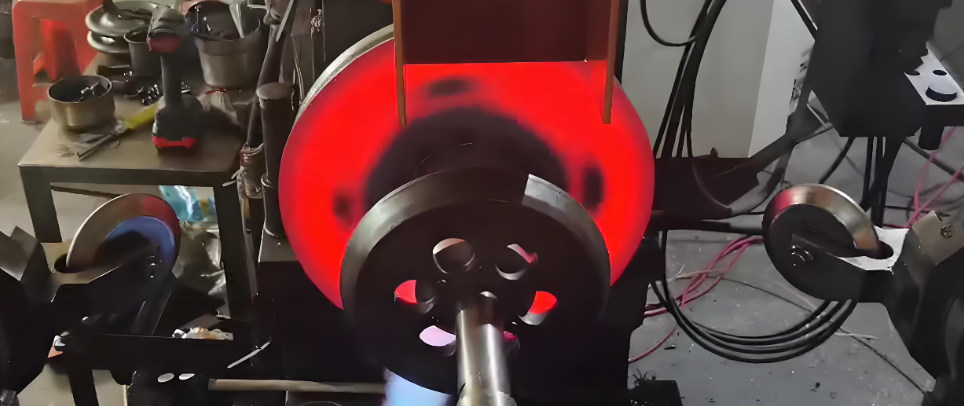
Metal spinning belongs to forging forming. During processing, heat is generated, which causes both the mold and the roller to heat up. This is particularly evident when processing thick and hard metals. During the long-term process, the cutter wheel and the mold will expand, causing the gap between the mold and the cutter wheel to decrease. As a result, the thickness of the formed workpiece will become thinner. Therefore, in mass production, especially in the metal forming of stainless steel with a thickness exceeding 3mm, temperature control has an impact on the stability and accuracy of metal forming.
Generally, there are two methods to solve the impact of temperature rise on the spinning gap. First, by preheating the mold, once the mold is heated to a certain temperature, its dimensions will no longer change, and the products being debugged will be more stable. Second, in mass production, water circulation is designed inside the mold for cooling.
Removing
Pneumatic removing is the most commonly used method in spinning. Pneumatic removing involves installing a pneumatic device inside the mandrel, and the workpiece is removed through pneumatic thrust.
When spinning some very deep cylinder, air pressure often makes it difficult to remove. Or the air pressure can make the bottom deform. A hydraulic cylinder device can be designed inside the mold. After the spinning forming is completed, the workpiece can be pushed out by the hydraulic cylinder.
Reasonable removing can greatly enhance the production efficiency of spun products. If there are problems with the removing method, it is also easy to cause scratches and impacts on the spun products.
How to remove metal spun product from mandrel>
Hot spinning
Heating can enhance the fluidity and ductility of materials. When forming some thick and hard metals, such as high-temperature alloys, hardox, titanium ally, Inconel, hot spinning is a better forming method. Because these material has low ductility, high hardness and tensile strength, and the workpiece cracks after a few spinning path. If the workpiece is heated until the material turns red, it will greatly enhance the ductility of the material, and the spring back of the metal will be less.
When forming aluminum alloys with a thickness of 6-8mm, it is appropriate to preheat the raw material with propane for 20-30 seconds. This will improve the fluidity of the material, make it easier for the workpiece to tightly wrap around the mold, and facilitate the control of spun product precision.
When forming stainless steel 304 or 316, preheating the material for 20-30 degrees can reduce metal springback, make the stainless steel workpiece wrap the mold tightly, and better control the forming size of the stainless steel. cold spinning will cause bigger springback value.
Drawing oil
The main function of the drawing oil is to reduce the friction between the workpiece and the roller, and to prevent the roller from scratching the formed workpiece.
The viscosity of the stretching oil is different. For instance, when aluminum is formed, the temperature is relatively low and the hardness is relatively soft, so a lower viscosity is required. For instance, the forming temperature of stainless steel is relatively high. During the spinning process, the drawing oil with a lower viscosity, due to insufficient adsorption force, is prone to being flung off during rotation, resulting in greater loss. Therefore, drawing oil with a higher viscosity is needed.
Drawing oil with a higher viscosity is more difficult to clean.
Machine parameter
1. Spindle speed
The higher the rotational speed of the spindle, the thinner the thickness formed after spinning, and the surface of the spun product is approximately smooth.
2. Feed speed
The higher the feed speed, the thicker wall thickness after spinning, and the worse the surface finish of the spun product.
3. Gap
The gap setting for the spun product is mainly related to the wall thickness of the material, the rigidity of the machine, the input spinning force, and the hardness of the blank material.
For machines with greater rigidity and thrust, the thicker the thickness, the softer the metal, and the larger the initial clearance value should be set.
Generally, during the forming process, the initial gap value should be set a bit larger. After the spinning forming, check if the interior of the workpiece is smooth. If it is smooth, it indicates that the workpiece has been wrap the mold tightly, and the gap value is sufficient. If the interior of the product is not smooth, the gap value needs to be further reduced.
Tolerance
The precision of spun products is generally best to achieve that diameter is ± 0.1mm and the height is ± 0.2mm. The main factors affecting the progress of spun products are the tool path program, machine accuracy, machine thrust, and blank material properties. Among all the factors, metal springback has the greatest impact on accuracy.
Different materials have different springback. For instance, among the same aluminum alloy, the springback of alloy aluminum 5052, 6061 and 6063 is greater than that of 1060. Therefore, the precision of aluminum alloy are not as good as the pure aluminum(1060,1070,1100).
Stainless steel 304 and 316 have greater springback and the forming accuracy is more difficult to control than aluminum. If you wants to control difficult-to-form metals such as alloy aluminum, stainless steel, or high-temperature alloys, by adjusting the tool path program (mainly increasing the back path) and preheating the blank, the workpiece can be wrap the mold thighly during the forming process, thus achieving the higher spinning tolerance.
The thrust of the machine mainly makes the grain refinement of the metal more obvious. The greater the rotational force output by the machine, the less spinningback of spun product after spinning. At the same time, the machine has good repositioning accuracy, and the gap during the spinning forming process will not fluctuate , ensuring better stability.
Appearance
The most important aspect of appearance control in spinning is to maintain a reasonable gap value. If the gap value is too large, the inner surface of the spun product will not be smooth; if it is too small, the machine is prone to vibration and theexterior surface will be uneven.
When making the final path in spinning forming, the spindle rotational speed can be increased and the feed speed be reduced to further achieve a better appearance.
The surface of the mold needs to be cleaned in time to prevent the chips from cutting from adhering to the mold and affecting the smoothness of the inner surface
The smoothness of the roller also needs to be inspected to prevent scratches on the surface of the spun products after the roller is worn.
The tail-top force should be sufficient to prevent the surface from being scratched by the relative movement between the workpiece and the mold.
NEXT:
None
Recommended
- -Metal spinning guide -The factors effect the spin forming
2026-06-25 - -Spin forming principle-CNC metal spinning technology
2026-02-22 - -What is CNC metal spinning machine tool
2024-08-15 - -Metal spinning VS deep drawing - The difference
2026-03-08 - -Aerospace components-Precision manufacturing of CNC spinning
2025-01-29 - -Metal spun products - what product spin forming can do
2025-01-24 - -Material knowledge required for designing and processing spinning mandrel
2026-08-20 - -How to design a CNC metal spinning mold | mandrel
2024-04-12 - -Metal spinning materials
2024-04-14 - -Metal spinning process and technology
2024-11-30