

Metal spinning machine-performance, types, price and problem
Metal spinning machine
The metal spinning machine is a non-cutting plastic forming machine tool for metal parts with a rotary body. It fixes the metal plate/tube blank on the core mold. The main shaft drives the blank to rotate at high speed. The spinning roller feeds and applies local pressure along the set trajectory, allowing the metal to continuously flow plastically and form. It belongs to the no-cutting metal forming process.
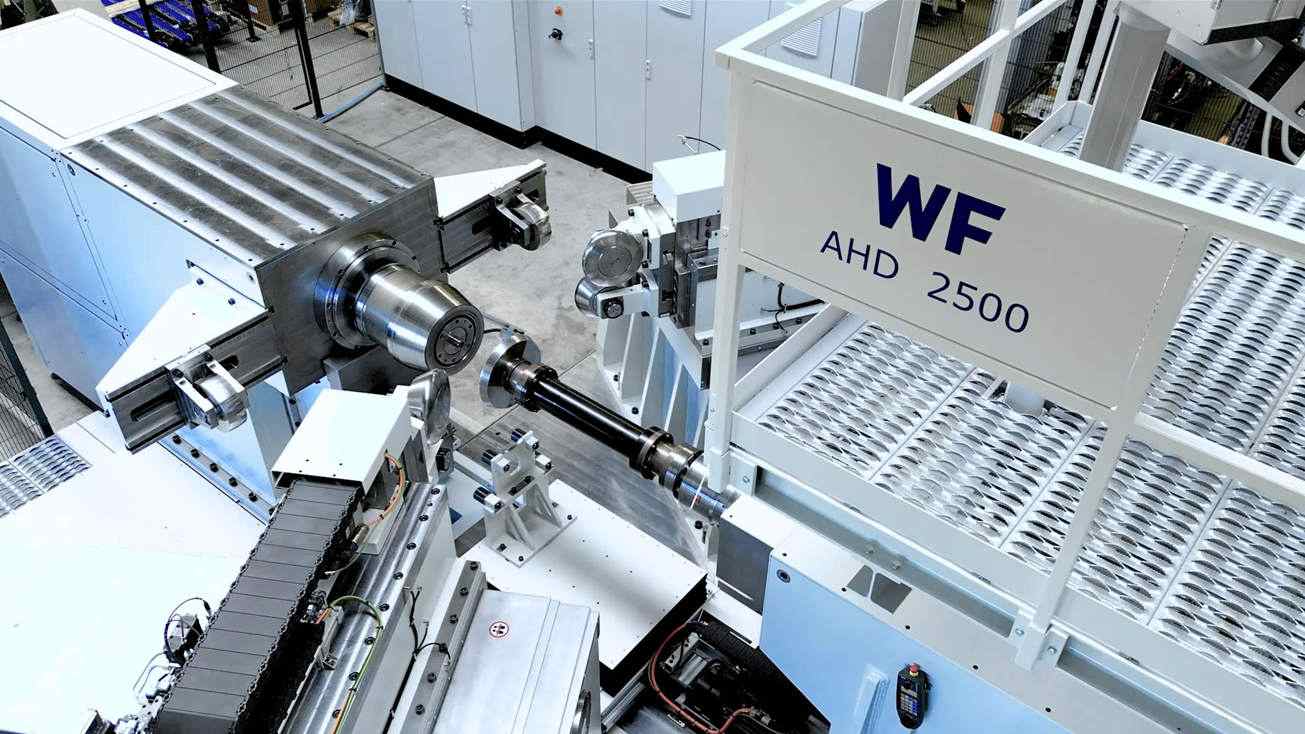
● Are you ready to invest in the metal spinning equipment?
With the development of CNC spinning, manual spinning has gradually lost its advantages. Whether in terms of production efficiency or processing accuracy, it cannot compare with CNC spinning equipment>. The price of CNC equipment is relatively high. Generally, the price of a small CNC spinning machine is over 3,000 US dollars. The price of heavy-duty spinning machines is around 80,000 US dollars. Investing in a spinning machine is a considerable expense for processing manufacturers. Therefore, before deciding to purchase a spinning machine, it is essential to read this article carefully, which will help you have a clearer understanding of the major performance, price, problem, types of the CNC metal spinning machine.
The performance of CNC spinning machine
1.Rigidity
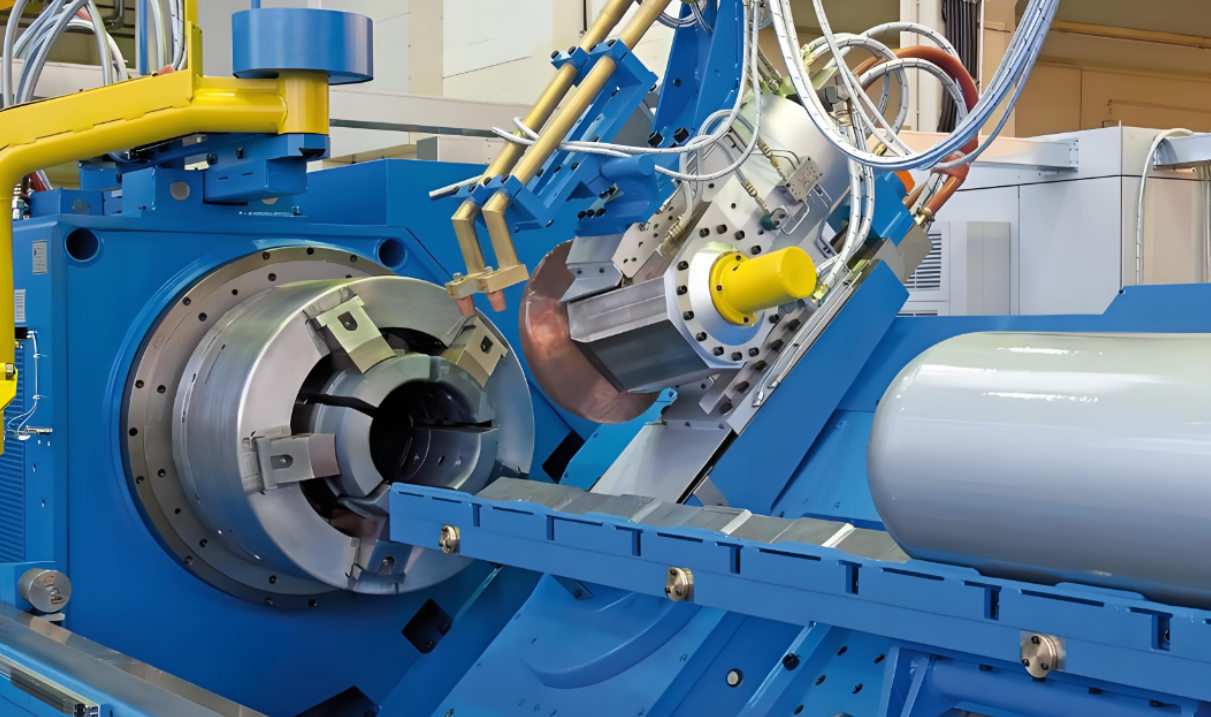
The rigidity of a spinning machine refers to the ability of the entire machine to resist elastic deformation and vibration caused by spinning force. It is divided into static rigidity (static deformation under load) and dynamic rigidity (anti-vibration capacity). It is the most core indicator for strong spinning and thick-walled parts spinning, and has much higher requirements than heavy-duty lathes. Metal spinning is a local continuous strong radial and axial loading process. Even if the no-load accuracy is excellent, if the rigidity is insufficient, the "tool deflection" will occur as soon as the load is applied.
● What components determine rigidity
1)Bed/Frame (Foundation rigidity)
- Material: HT300 integral casting (preferred), internal reinforcing ribs, honeycomb structure, multiple aging stress relief; Heavy machinery also uses thick plate welding and stress relief.
- Structure: The vertical frame (upper and lower beams + columns) has better rigidity than the horizontal one. Box-type structure, wall thickness 50 to 150mm; The self-weight of heavy-duty machinery can reach tens to dozens of tons.
- Foundation: Anchor bolts + vibration isolation pads. A loose foundation will directly and significantly reduce the overall dynamic rigidity of the machine.
2)Spindle
Withstand radial and axial rotational pressures. Heavy-duty machinery with heavy-duty precision rolling bearings/hydrostatic bearings; Insufficient preload of the bearing, bearing wear, and rapid decline in rigidity. The deflection at the front end of the main shaft is a key assessment point.
3)Rotary Table (rotary frame)
Guide rails + lead screws/hydraulic slides, ** Pre-tightening is very crucial **. Linear guide/rectangular guide, lead screw pre-tightening; The slide table is the component that directly applies rotational pressure. Insufficient rigidity of the slide table is most likely to cause tool deflection.
4)Tailstock
Provide axial clamping force to support the blank and core mold. Poor rigidity of the tailstock can cause the core mold to bend and sway.
● Typical defects caused by insufficient rigidity
- The wall thickness of the workpiece is uneven. During the spinning process, the spinning wheel retreats (allows the tool to pass).
- Spiral vibration patterns and fish-scale patterns appear on the surface, and the noise is loud.
- The contour dimensions and busbar shapes have large deviations, and the spring back is unstable.
- It is prone to wrinkling and cracking when processing thick-walled and high-strength materials (such as stainless steel and titanium alloy).
- Long-term production leads to rapid decline in precision, and the wear of bearings and guide rails accelerates.
- Key point : The accuracy of the meter reading without load is qualified does not mean the rigidity under load is qualified . It is necessary to test the deformation under load.
2.Spinning force
The magnitude of the spinning force output by the metal spinning machine is jointly determined by the motor power, the reduction ratio of the reducer, the span of the guide rail, and the size of the lead screw and the linear guide rail. The greater the rotational force, the larger the diameter and thickness of the raw material that can be formed.
For the most commonly used and popular 800 double-wheel heavy-duty spinning machine on the market, the spindle motor is generally selected as 22-30KW, the X-axis and Y-axis motors are 8-12KW, the diameter of the lead screw is 40-50mm, and the width of the roller guide rail is 40-50mm. The bearings used in lead screws need to withstand both axial and radial forces simultaneously. Their precision grades can be lower than those of lathes, but the force they bear is much greater than that of lathes. The wider the distance between the two guide rails of the X-axis or Z-axis, the greater the torque force it can withstand. Generally, it is recommended to be between 800 and 1200mm.
The rotary force is the local plastic deformation force exerted by the rotary wheel on the blank, which is divided into three components: radial force Fr, axial force Fa, and tangential force Ft. Among them, the radial force is the largest and serves as the core basis for the design of machine tool rigidity, spindles, slides, and core molds.
The spinning force of strong spinning (thinning spinning) is much greater than that of ordinary spinning (forming spinning).
● Characteristics of the three components of Force
1)Radial force Fr (maximum)
Perpendicular to the workpiece busbar, pointing towards the core mold; It is the main force for the wall thickness reduction caused by the rotary wheel extrusion of materials.
- Strong spinning: Fr > Fa > Ft
- General experience percentage : Fr: Fa: Ft ≈(2-3):1 : (0.3-0.8)
2)Axial force Fa
Along the direction of the workpiece generatrix, the material flows forward by the rotating wheel. It is supported by the feed direction of the slide table.
3)Tangential force Ft
The resistance that drives the billet to rotate in the circumferential direction determines the spindle torque.
4)Formula for Estimating Rotational Force
Fr ≈K* t0 *b
- K: Material deformation resistance (MPa, related to material, temperature, and thinning rate)
- t0 : Original wall thickness of the blank (mm)
- b: The contact width (mm) between the rotating wheel and the blank is determined by the fillet R of the rotating wheel and the amount of thinning
Contact width b ≈ √2*Δt*R
- Δt : single reduction in wall thickness;
- R : Radius of the fillet of the rotating wheel
5)Material K Reference (Room temperature)
- Aluminum alloy: 300-500 MPa
- Low-carbon steel: 600 to 800 MPa
- 45 # steel: 800 to 1000 MPa
- 304 stainless steel: 1000-1400 MPa
- Titanium alloy: 1200-1600 MPa
For example : 304 stainless steel, billet thickness 2mm, rotating wheel R6, single thinning Δt=0.6mm
b=√2*0.6*6≈2.68mm
Fr ≈1200*2*2.68≈6432N≈6.4kN
For multi-pass, large billets and thick-walled parts, the radial force of a single wheel can easily reach tens of tons. In a double-wheel spinning press, both wheels are subjected to force simultaneously, doubling the total load, but the radial forces cancel each other out to some extent.
6) Key Factors Affecting the Magnitude of Rotational Force
- Material : The higher the strength, the stronger the work hardening, and the greater the rotational force (titanium, stainless steel > carbon steel > aluminum)
- Single thinning rate Δt : The greater the thinning, the more sharply the rotational force rises; If the thinning rate exceeds the material's limit, cracking will occur
- Rotary wheel fillet R : The larger the R, the greater the contact area, the higher the rotary force, but the better the surface quality. If R is too small, it is prone to material gnawing and vibration marks.
- Feed ratio f (mm/r, the axial feed rate per rotation of the workpiece on the rotating wheel) : A larger feed ratio Narrows the contact zone, slightly reduces the rotational force, but the surface quality deteriorates.
- Billet temperature : Hot spinning can significantly reduce the deformation resistance of materials, and the spinning force drops significantly (hot spinning is commonly used for titanium alloys and superalloys).
- Billet condition : The rotational pressure of annealed billets is lower than that of cold-worked hardened billets.
3.Feed speed and spindle rotating speed
The spindle speed and feed rate during the spinning process have a significant impact on the production speed.
By comparing the light spinning machine and the heavy spinning machine, it is quite obvious that there is a significant difference between the spindle speed and the feed speed. Compared with the same 600 double-wheel spinning machine, the maximum thickness that a general light spinning machine can process is 2.5mm for aluminum, 1.5mm for iron, and 1.2mm for stainless steel. However, the maximum thickness that a heavy spinning machine can process is 6mm for aluminum, 4mm for iron, and 2.5mm for stainless steel. The spindle speed of a light-duty spinning machine can reach 1500-2000 r /min, and the feed rate for spinning forming can reach 4000-6000mm/min. However, the spindle speed of a heavy-duty spinning machine is 400-800 r /min, and the feed rate for spinning forming can only be 1000-2000mm/min.
Because the spindle speed and feed rate of the light spinning machine are faster, the processing time for forming is shorter and the production efficiency is higher. Although heavy-duty machines have slower spindle speeds and feed rates, they can process thicker metals.
1)Spindle rotating speed reference>
Heavy duty CNC spinning machine : 200- 1000r/min
Light duty CNC spinning mahine:2000-6000r/min
2)Feed rate reference
Feed rate includes spinning feed rate and retraction rate. Spinning feed rate is the process in which the machine and the tool wheel are under load and force, while retraction refers to the process in which the machine and the tool wheel move freely without any load.
- Spinning feed rate
> Aluminum parts : 800-1500 mm/min
> Carbon steel conventional rotation : 600-1000 mm/min
> Stainless steel/titanium alloy shearing spinning : 50-300 mm/min (low speed)
- Retraction rate: It can reach up to 5000-10000mm/min, reducing the program movement time.
3)Key factors influencing the value of feed
- Material plasticity : The better the plasticity, the larger the feed can be. The feed rates for titanium, high-strength steel and stainless steel are relatively small.
- Thinning rate : The greater the thinning rate, the lower the feed rate should be.
- Wall thickness and diameter of parts : For thin-walled and large-diameter parts, the feed should be smaller to prevent wrinkling.
- Wheel parameters : Wheel fillet, Angle of attack; The large rounded corner rotary wheel can appropriately increase the feed.
- Machine tool rigidity : Insufficient rigidity of the equipment requires a low feed rate to avoid vibration marks.
4.Accuracy
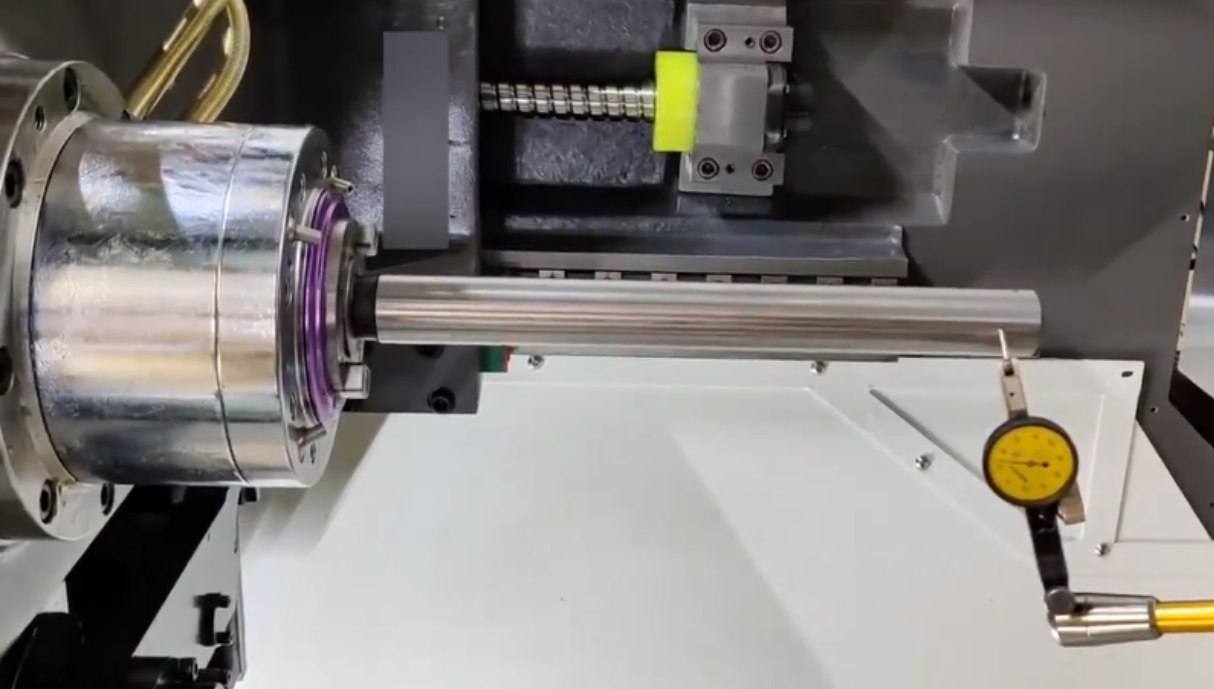
The accuracy of the spinning machine has an impact on the spinning forming process, especially when spinning thin materials (with a thickness less than 1.5mm). Unstable accuracy can easily cause the workpiece to break at the same time, the accuracy of the final spun products is also unstable. The precision of a spinning machine mainly depends on three aspects. At first, The runout of the spindle and the clamping. Second, The coaxiality of the spindle and clamping. Third, The repeat positioning accuracy of the cross slide table.
1)The runout of the spindle and the clamping
The accuracy of the spindle and clamping needs to be controlled within 0.01mm. If there is runout between the spindle and tailstock, the inner wall surface of the spun workpiece will show a phenomenon of being partly smooth and partly rough. At the same time, the bottom of the workpiece is prone to scratches, and the precision of the products made will be poor.
2)The coaxiality of the spindle and clamping
The coaxiality of the spindle and clamping needs to be controlled within 0.03mm. If the coaxiality value is big, In addition to the problems of cracking during the spinning forming process and unstable product dimensions, the blank will generate centrifugal force between the mandrel and the clamping, and there is a risk of the material sheet being thrown out.
3)Repositioning accuracy of cross slide
The repeat positioning accuracy generally needs to be controlled at 0.02mm. If the repeat positioning accuracy is poor, it will lead to unstable gap> between the roller and the mandrel, and the dimensional accuracy of the spun products made cannot be controlled.
4)Machine positioning accuracy vs actual forming accuracy of the workpiece
The servo positioning/repeat positioning of machine tools can achieve a very high level (±0.01 to 0.02mm), but the workpiece is affected by springback, internal stress of the metal, the strength of the structure. The accuracy of spun product cannot reach the idle running accuracy of the machine tool. This is a common pitfall point for many model selections.
Which performance is important?
1)Precision, thick and hard metal spinning
Metal:stainless steel, titanium, Inconel, superalloy
Thickness >2mm
The most crucial aspect of a spinning machine is its good rigidity and big spinning force. This makes it easier to overcome the springback of the metals, and during the forming process, the workpiece can more closely adhere to the mold. Shearing spinning makes it easier to control the precision of the product.
For the production of aviation and aerospace parts, the rigidity, spinning force and accuracy of CNC metal spinning are all indispensable.
2)No precision,thin and soft metal spinning
Metal :aluminum, steel, copper, brass
Thickness<2mm
For spun products without precision requirements, such as lampshades, tableware, furniture and other products that only need appearance, the spindle rotating speed and feed speed of the spinning machine is very important. The higher the rotational speed of the spinning spindle, the better the surface roughness of the final formed product. At the same time, the faster the feed speed, the shorter the processing time and the lower the production cost.
● The reasons for the decline in accuracy and rigidity of the spinning machine after being used for a period of time
- Loose foundation feet, foundation settlement;
- The preload loss of guide rails, lead screws and bearings has led to an increase in wear clearance.
- The internal stress of the bed is released, and permanent deformation occurs due to long-term heavy load.
- Hydraulic models : The sealing of the oil cylinder and pressure fluctuations are indirectly manifested as a deterioration in rigidity.
Common problems of spinning machines>
1.Make the machine tool bed by welding
Some poor-quality spinning equipment manufacturers, in order to reduce manufacturing costs, choose welding to make the machine bed. Due to the large force on the spinning machine, the welded bed does not have the seismic resistance of castings, and the service life of the machine is not long.
Machine bed must choose the HT300 as the casting material.
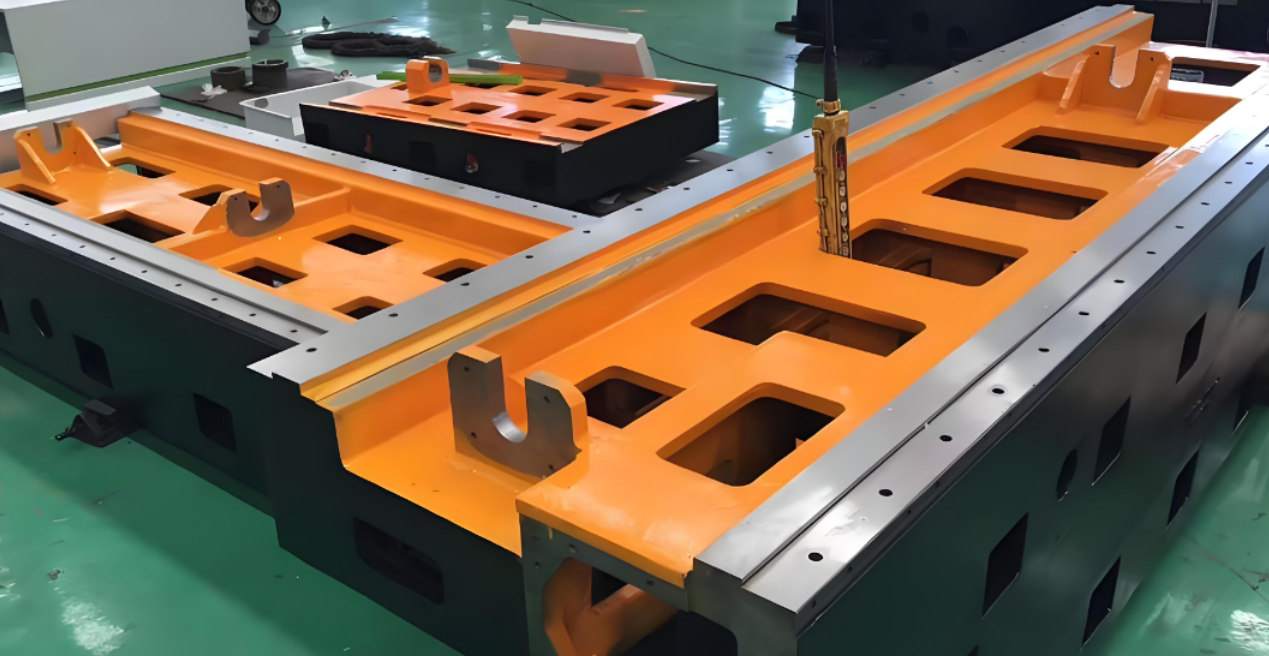
2.The casting was not subjected to heat treatment for stress relief
If the casting is not stress-relieved, the short-term machine repeat positioning accuracy is acceptable. However, over long-term use, as the stress is released, the casting itself will bend and twist, and the repeat positioning accuracy will deteriorate.
3.the structure design of machine bed
The main mechanical design of the spinning machine is the casting design. The remaining accessories such as the spindle, lead screw, linear guide, and motor can all be directly selected and purchased from market suppliers. If the strength and rigidity of the casting design are insufficient, it can be judged three several aspects. First, the weight of the overall bed of the machine tool. Second, the wall thickness of the casting. Third, the span of the two guide rails on the X-axis or Z-axis.
4.Selection of the system
We all know that the most stable numerical control system is Siemens. However, the after-sales service capabilities of systems vary from country to country. In Europe and the United States, it is recommended to choose Siemens. In Japan and South Korea, Fanuc is suggested. In India and Vietnam, GSK system is recommended.
In fact, the after-sales service of a general-purpose spinning machine is similar to that of a lathe. Generally, technicians who are familiar with lathes can repair spinning machines.
5.the specification of lead screw and guide rail
Theoretically, without considering cost, the larger the specifications of the lead screw and linear guide rail, the better the rigidity of the spinning machine and the longer its service life. Because there are balls inside the lead screw and rollers inside the linear guide, the larger the specification, the larger the contact surface and the more wear-resistant it is.
Recommendations for CNC spinning equipment manufacturers
1. Heavy duty CNC metal spinning machine manufacturer
|
Lefield |
German |
|
WF |
German |
|
MJC |
America |
|
DENN |
Spain |
|
Prosper |
China |
|
Okay |
China |
|
Dienlis |
China |
Process requirement:precision, thick and hard metal spinning
Thickness : Aluminum thickness > 4mm stainless steel > 2mm steel > 3mm
Metal spinning application:aerospace, automobile, equiment, medical, funnel
If you want to know more, you can read this article Metal spinning report ▏the best CNC metal spinning machine manufacturer in the world>
2. Light duty CNC metal spinning machine manufacturer
|
Hongxiang Machinery |
China |
|
Dading Hardware machinery |
China |
Process requirement:No precision, thin and soft metal spinning
Thickness: Aluminum thickness <3mm stainless steel<1.5mm steel<2.5mm
Metal spinning application:tableware, furniture hardware, lampshade, hotel hardware.
The price of CNC metal spinning machine
1. The price of the Chinese CNC metal spinning machine
Chinese equipment is quite popular in India, Vietnam and Thailand because Chinese spinning equipment offers high cost performance.
|
Blank diameter |
Roller quantity |
Spinning force |
Price |
|
300mm |
Single |
Light duty |
4000-6000 dollars |
|
600mm |
Single |
Light duty(3mm aluminum) |
15000-20000 dollars |
|
Double |
Heavy duty(6mm aluminum) |
40000-5000 dollars |
|
|
800mm |
Single |
Light duty(3mm aluminum) |
20000-25000 dollars |
|
Double |
Heavy duty(6mm aluminum) |
52000-60000 dollars |
|
|
1200mm |
Single |
Light duty(3mm aluminum) |
62000-70000 dollars |
|
Double |
Heavy duty(6mm aluminum) |
75000-10000 dollars |
2. The price of the European and American CNC spinning equipment
Machines from the United States, Europe and Japan are generally more expensive than those from China, with prices usually being 3 to 5 times higher than those from China. In high-end market applications, the precision and stability are better.
Machine types choosing
1. Single roller vs double roller
The cost of single-roller spinning machines is lower, while the force on the workpiece of double-roller spinning machines is more balanced and stable, and the dimensional accuracy of the processed products is higher. If the precision requirement is not high and the height of the spun product is less than 120mm, single-roller spinning should be selected as much as possible. If the precision requirement is high and the spinning height exceeds 120mm, it is advisable to choose a double roller as much as possible.
2. Light duty vs heavy duty
For spinning thin and soft metals, such as aluminum and copper with a thickness of less than 2.5mm, iron with a thickness of less than 1.5mm, and stainless steel with a thickness of less than 1.2mm, a light spinning machine is selected. It is inexpensive and has a high processing efficiency. Spin thick and hard metals, stainless steel > 2mm, as well as metals harder than stainless steel, such as Inte nickel, superalloys, titanium alloys. Select a heavy-duty spinning machine.
3. Hot spinning vs cold spinning
When the thickness of stainless steel exceeds 5mm, the thickness of aluminum exceeds 10mm, or when spinning some metals with high hardness and tensile strength, such as Hardox, Internickel, and high-temperature alloys, aerospace aluminum. In addition to purchasing a heavy-duty spinning press, it is best to add a heating device to the spinning machine. Heating can soften the metal, increase the fluidity of the spinning process, reduce the force on the spinning press and the springback of the metal, and at the same time better control the precision of the product.
4. Tube spinning vs sheet spinning
The raw material of the tube spinning is tubes, and the spindle is designed with fixtures to fix the tubes. The raw material of the sheet spinning is the sheet, and the pressure provided by the oil cylinder of the tailstock is needed to clamp the material sheet.
More detals to read this article :How to choose a CNC metal spinning machine>
Machine testing
Chinese equipment is quite popular in India, Vietnam and Thailand because Chinese spinning equipment offers high cost performance.
- Accuracy inspection
- Produciton stability testing (100 PCS of stainless teel cylinder)
- Max diameter and thickness
- Max height
More detals to read this article :Key Considerations for Purchasing a CNC metal spinning equipment>
NEXT:
None
Recommended
- -Metal spinning machine-performance, types, price and problem
2026-09-29 - -Metal spinning guide -The factors effect the spin forming
2026-06-25 - -Spin forming principle-CNC metal spinning technology
2026-02-22 - -What is CNC metal spinning machine tool
2024-08-15 - -Metal spinning VS deep drawing - The difference
2026-03-08 - -Aerospace components-Precision manufacturing of CNC spinning
2025-01-29 - -Metal spun products - what product spin forming can do
2025-01-24 - -How to design a CNC metal spinning mold | mandrel
2024-04-12 - -Metal spinning materials
2024-04-14 - -Metal spinning process and technology
2024-11-30